
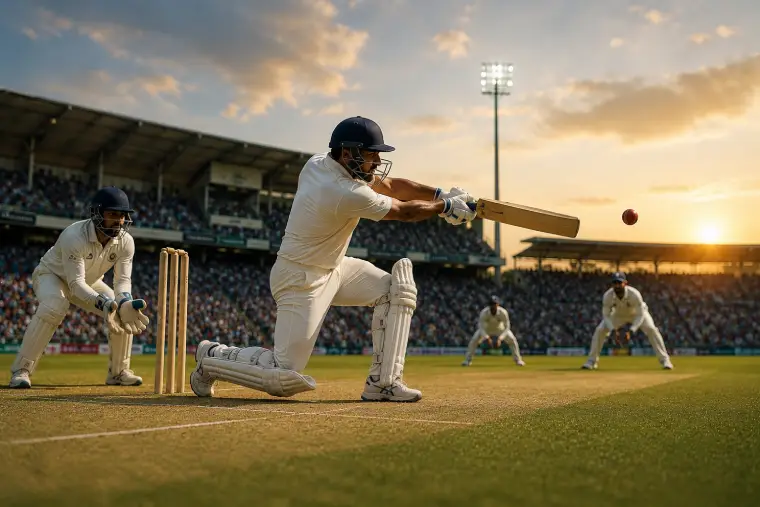
The ICC Cricket World Cup, a 50-over tournament, is not just a game of cricket but an emotion for many cricket fans. As you are aware or not, the Cricket World Cup Winners Since 1975, how it has expanded across the world. Initially, when it started, that was the era of fast bowling and the legendary West Indies cricket team, but over time, everything changed. Modern cricket is changing swiftly, where adaptability, patience, aggression, and consistency are required a lot.
Looking at Cricket World Cup Winners Since 1975 reveals much more than a list of champions. It highlights how ODI cricket has evolved from 60-over matches played in white clothing to a global tournament driven by advanced analytics, specialized roles, and changing playing conditions. This analysis examines the historical data, major trends, and key factors that shaped every World Cup-winning campaign.
Understanding the Core Concept
The ICC Cricket World Cup is the premier tournament in One Day International cricket. First played in England in 1975, it has grown into the sport’s most prestigious global event.
When studying Cricket World Cup Winners Since 1975, it is important to understand that winning strategies have changed dramatically across eras.
In the 1970s and 1980s, teams relied heavily on fast bowling dominance and batting depth. By the 1990s and 2000s, fielding standards and tactical planning became increasingly important. In the modern game, data analysis, squad flexibility, and powerplay management often determine outcomes.
The tournament itself has also changed significantly:
| Era | Format Characteristics |
|---|---|
| 1975–1983 | 60 overs per side, red ball, white clothing |
| 1987–1992 | Reduced to 50 overs |
| 1996–2007 | Day-night matches expanded |
| 2011–Present | Two new balls, advanced DRS usage, and modern fielding restrictions |
These changes directly influenced how champions were built.
Data Comparison & Statistical Evidence
Cricket World Cup Winners List From 1975 To 2023
| Year | Winner | Runner-Up | Player Of The Match In Final |
| 1975 | West Indies | Australia | Clive Lloyd |
| 1979 | West Indies | England | Viv Richards |
| 1983 | India | West Indies | Mohinder Amarnath |
| 1987 | Australia | England | David Boon |
| 1992 | Pakistan | England | Wasim Akram |
| 1996 | Sri Lanka | Australia | Aravinda de Silva |
| 1999 | Australia | Pakistan | Shane Warne |
| 2003 | Australia | India | Ricky Ponting |
| 2007 | Australia | Sri Lanka | Adam Gilchrist |
| 2011 | India | Sri Lanka | MS Dhoni |
| 2015 | Australia | New Zealand | James Faulkner |
| 2019 | England | New Zealand | Ben Stokes |
| 2023 | Australia | India | Travis Head |
ODI World Cup Winners By Year And Country
| Country | Titles |
| Australia | 6 |
| India | 2 |
| West Indies | 2 |
| Pakistan | 1 |
| Sri Lanka | 1 |
| England | 1 |
The table answers one of cricket’s most searched questions: Which Team Has Won The Most Cricket World Cups?
Australia leads comfortably with six titles, accounting for nearly half of all World Cups held so far.
Dominance By Era
| Era | Most Successful Team |
| 1975–1979 | West Indies |
| 1983–1996 | Shared Dominance |
| 1999–2007 | Australia |
| 2011–2023 | Australia and India are consistently the strongest |
One notable trend from the Complete History of ICC Cricket World Cup Champions is that sustained dominance usually lasts only two or three tournament cycles before competitive balance returns.
Also Read: T20 World Cup Leading Wicket Takers List (2007–2026)
Key Reasons Behind the Trend
Structural Differences Between Eras
Early World Cups were played almost entirely in England. Teams familiar with seam-friendly conditions held a natural advantage.
As the tournament expanded globally, champions increasingly needed to adapt to different surfaces, climates, and match situations.
Australia’s success is a strong example. Their titles came in England, South Africa, the Caribbean, and India, showing adaptability across conditions.
Tactical Evolution
The most successful World Cup teams rarely relied on a single superstar.
West Indies combined elite fast bowlers with aggressive batting.
Australia’s dominant teams featured world-class performers across every department.
India’s 2011 victory showcased the value of experienced middle-order batting combined with disciplined bowling.
Looking at Cricket World Cup Winners Since 1975, balanced squads consistently outperform teams dependent on one or two match-winners.
Skill Gap Impact
The gap between elite teams and emerging nations was much larger during the first few decades.
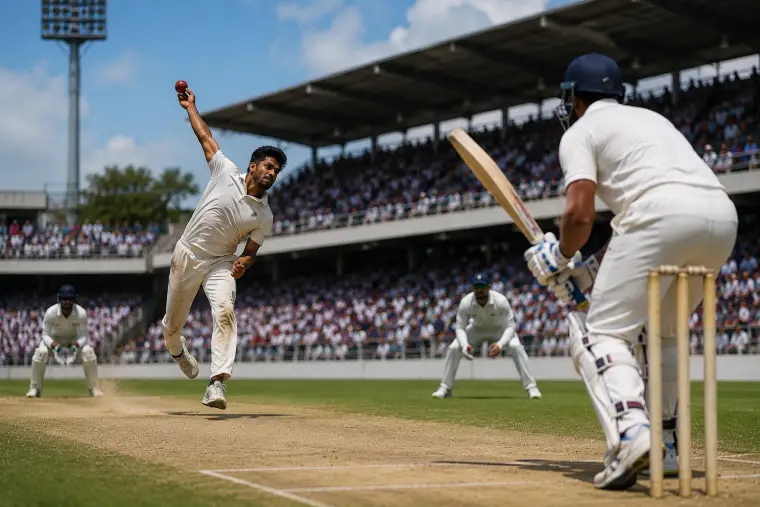
In modern tournaments, improved coaching, analytics, and professional structures have reduced that gap.
This is one reason knockout matches have become increasingly unpredictable despite strong group-stage performances.
Why the Opposite Scenario Fails
History shows that teams built around one strength often struggle when conditions change.
For example:
- Strong batting lineups without wicket-taking bowlers frequently fall short in knockout matches.
- Teams overly dependent on home conditions struggle abroad.
- Sides relying heavily on one star player become vulnerable under pressure.
Several highly talented teams entered tournaments as favorites but failed because they lacked balance.
The broader lesson from Cricket World Cup Winners Since 1975 is that adaptability matters more than raw talent.
World Cups are won over multiple weeks, not through isolated performances.
Real Match Examples and Case Studies
India vs West Indies, 1983 Final
India entered the final as massive underdogs.
Defending only 183, they produced one of the greatest bowling performances in tournament history.
The victory transformed Indian cricket and changed the sport’s commercial future forever.
Australia vs India, 2003 Final
Australia produced arguably the most dominant World Cup final performance ever.
Ricky Ponting’s unbeaten century powered Australia to 359 runs, effectively deciding the contest before India’s chase began.
Australia vs India, 2023 Final
Australia once again demonstrated why tournament experience matters.
Despite India’s unbeaten run before the final, Australia absorbed pressure, adapted to conditions, and secured another title through Travis Head’s match-winning century.
Expert Insight: The Pattern Many Fans Miss
Whenever fans discuss or argue about the ODI World Cup winners list, they can take advantage of Cricket World Cup Winners Since 1975, created by cricketer.io.
You will definitely be looking at a pattern like how it can be done, but this is not something that can be noticed easily. Only Team Australia is a team that is coming back and winning the trophy back-to-back, because of their positive mind until the last ball played, fielding, effortless batters, and consistency in performances.
Whether it was West Indies’ pace attack, Pakistan’s reverse swing, Australia’s relentless pressure, Sri Lanka’s tactical discipline, or India’s balanced bowling unit in 2011, successful teams consistently controlled overs 11–40.
This phase receives less attention than powerplays or death overs, yet it often determines tournament outcomes.
Another overlooked trend is leadership continuity.
Most World Cup Winning Captains spent years building their teams before lifting the trophy. Clive Lloyd, Allan Border, Arjuna Ranatunga, Ricky Ponting, MS Dhoni, and Pat Cummins all benefited from stable long-term planning rather than short-term success.
How Modern World Cups Differ From 1975
The contrast between the first World Cup and today’s tournament is remarkable.
| Category | 1975 World Cup | Modern World Cup |
| Overs | 60 | 50 |
| Clothing | White | Colored |
| Ball | Red | White |
| Technology | None | DRS, analytics |
| Fitness Standards | Basic | Highly professional |
| Data Analysis | Minimal | Extensive |
These changes have increased scoring rates, improved fielding standards, and transformed tactical planning.
The modern tournament is significantly more competitive than the early editions.
Conclusion
The story of Cricket World Cup Winners Since 1975 is ultimately a story of adaptation. While different eras produced different champions, the underlying formula has remained surprisingly consistent. The most successful teams combined depth, tactical flexibility, strong leadership, and the ability to perform under pressure.
The numbers show that talent alone is rarely enough. Across five decades of ICC Cricket World Cup History, the teams that lifted the trophy were usually the ones that adapted fastest to the demands of their era.
FAQs
Which team has won the most Cricket World Cups?
Australia has won six ICC Cricket World Cup titles, the most by any nation.
Who won the first Cricket World Cup in 1975?
West Indies won the inaugural World Cup by defeating Australia in the final.
How many World Cups has India won?
India has won two Cricket World Cups, in 1983 and 2011.
Which World Cup final is considered the biggest upset?
India’s victory over the West Indies in the 1983 final is widely regarded as one of the biggest upsets.
Has any team won three consecutive World Cups?
Yes. Australia won the 1999, 2003, and 2007 editions, achieving an unprecedented hat-trick of titles.