
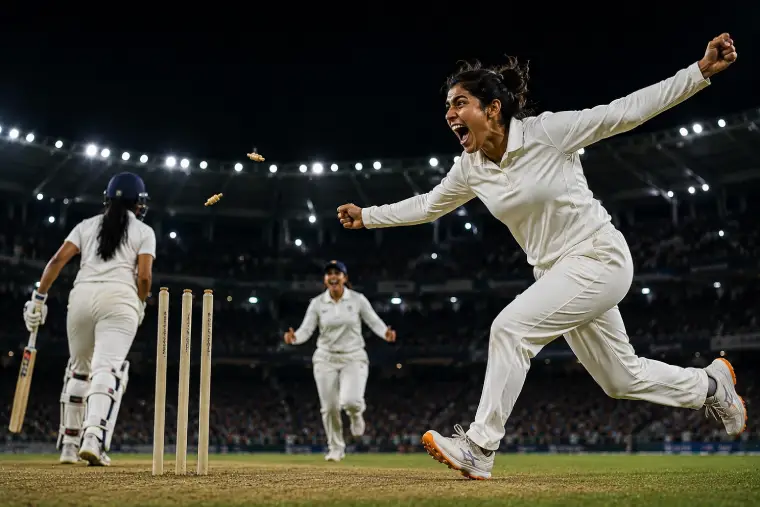
The last decade was transforming for women cricketers, it consist lot of things like growing women’s cricket in multiple countries. It boosts critical moments, like how Fastest Centuries In Women’s Cricket shifts the thought process for the rest of the domestic players. The rise of women cricketers in bigger tournaments in modern cricket really makes sense, and under pressure games, with higher strike rates with whatever they have, is not that easy.
Looking at Fastest Centuries In Women’s Cricket through a data-driven lens reveals a broader story. Professional leagues, improved coaching systems, advanced analytics, and fearless batting approaches have all contributed to an era where record-breaking hundreds are becoming increasingly common.
This analysis examines the numbers behind Fastest Centuries In Women’s Cricket, the factors driving this trend, and why modern players are breaking batting records at a faster rate than previous generations.
The core concept of the game
When discussing Fastest Centuries In Women’s Cricket, the key measurement is simple: the number of balls required to reach 100 runs.
A batter scoring 100 from 45 balls has a much greater impact than one scoring 100 from 120 balls, particularly in limited-overs formats.
The discussion around Fastest Centuries In Women’s Cricket is usually divided into two categories:
- Fastest Century In Women’s ODI Cricket History
- Fastest T20I Centuries In Women’s Cricket
The shorter the format, the more valuable rapid scoring becomes. As a result, many of the most memorable entries among the Players With The Fastest Hundreds In Women’s Cricket have come in T20 cricket.
However, recent ODI records suggest aggressive batting is now influencing the 50-over format as well.
Data Comparison & Statistical Evidence
Fastest International Women’s Centuries
| Player | Team | Format | Balls To 100 | Year |
|---|---|---|---|---|
| Deandra Dottin | West Indies | T20I | 38 | 2010 |
| Meg Lanning | Australia | ODI | 45 | 2012 |
| Alyssa Healy | Australia | T20I | 46 | 2019 |
| Tammy Beaumont | England | T20I | 47 | 2018 |
| Harmanpreet Kaur | India | T20I | 49 | 2018 |
| Smriti Mandhana | India | ODI | 50 | 2025 |
Deandra Dottin’s 38-ball century remains the benchmark among Fastest T20I Centuries In Women’s Cricket, while Meg Lanning owns the record for the Fastest Century In Women’s ODI Cricket History with a remarkable 45-ball hundred.
Fastest Women’s ODI Hundred List
| Rank | Player | Balls |
|---|---|---|
| 1 | Meg Lanning | 45 |
| 2 | Smriti Mandhana | 50 |
| 3 | Karen Rolton | 57 |
| 4 | Beth Mooney | 57 |
| 5 | Sophie Devine | 59 |
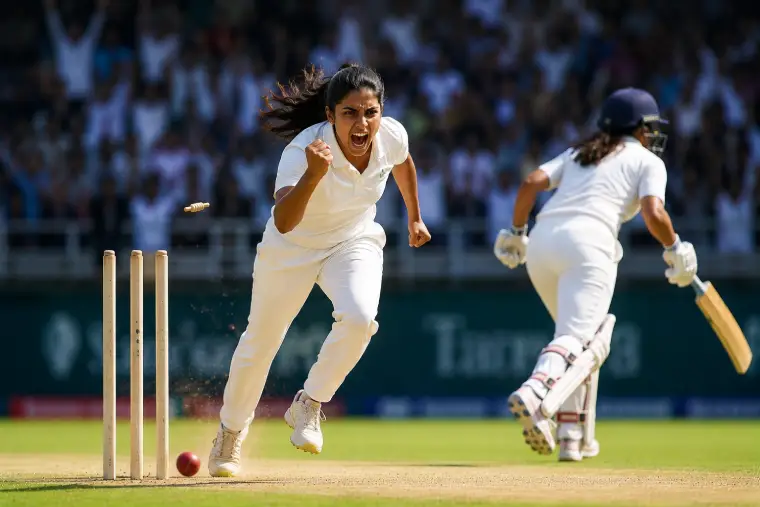
Recent entries from Smriti Mandhana and Beth Mooney show that ODI scoring rates are accelerating rapidly compared to previous decades.
Strike Rate Comparison
| Player | Strike Rate |
|---|---|
| Deandra Dottin | 248.88 |
| Meg Lanning | 222+ |
| Alyssa Healy | 217+ |
| Smriti Mandhana | 200+ |
| Harmanpreet Kaur | 204+ |
One of the clearest indicators behind Fastest Centuries In Women’s Cricket is the dramatic increase in strike rates among top-order batters.
A Growing Trend
A decade ago, centuries often came from innings built gradually over time.
Today, many of the newest entries among the Players With The Fastest Hundreds In Women’s Cricket are reaching 50 within the first half of their innings before accelerating even further.
This shift is visible across women’s cricket records and international tournaments worldwide.
Key Reasons Behind The Trend
Structural Differences In Modern Women’s Cricket
The professionalization of women’s cricket has transformed batting standards.
Modern international players benefit from:
- Full-time contracts
- Dedicated batting coaches
- Video analysis
- Fitness specialists
- Match-up planning
These resources were unavailable to many players who set records in earlier eras.
As a result, the standard required to join the list of Fastest Centuries In Women’s Cricket continues to rise.
Tactical Evolution
Modern teams attack earlier than ever.
Batters now view the powerplay as an opportunity rather than a survival phase.
Many of the innings featured among Fastest Centuries In Women’s Cricket share similar characteristics:
- Aggressive starts
- High boundary percentage
- Constant strike rotation
- Minimal dot-ball pressure
This tactical change has significantly increased scoring rates.
Impact Of Franchise Cricket
The Women’s Premier League, Women’s Big Bash League, and The Hundred have accelerated batting development.
These competitions expose players to:
- International-quality bowling
- Pressure situations
- Advanced tactical planning
Many modern Record-Breaking Centuries In Women’s International Cricket are influenced by skills developed in franchise tournaments.
Improved Power Hitting
Women’s cricket has entered a new physical era.
Players are stronger, fitter, and more capable of clearing boundaries consistently.
This has increased the frequency of:
- Sixes
- Boundary percentages
- High strike rates
As a result, the list of Fastest Centuries In Women’s Cricket is growing faster than ever before.
Why The Opposite Scenario Fails
If aggressive batting is producing success, why doesn’t conservative batting work as effectively anymore?
The answer lies in scoring expectations.
In modern T20 cricket, teams often target scores above 170.
In ODI cricket, totals beyond 300 are increasingly common.
A batter scoring run-a-ball cricket may preserve her wicket but often slows overall team momentum.
This is particularly important when studying Fastest Centuries In Women’s Cricket because nearly every record-breaking innings follows the same principle: early pressure on bowlers.
Defensive approaches create several problems:
- Lower run rates
- Increased scoreboard pressure
- Fewer scoring opportunities later
- Greater dependence on late acceleration
Teams that fail to attack often struggle to keep pace with modern scoring benchmarks.
The contrast explains why aggressive batting has become a central feature of women’s cricket batting records.
Real Match Examples & Case Studies
Deandra Dottin vs South Africa (2010)
No discussion about Fastest Centuries In Women’s Cricket is complete without Deandra Dottin’s historic innings.
She reached her hundred in only 38 deliveries and became the first player to score a Women’s T20I century. The record still stands more than a decade later.
Meg Lanning vs New Zealand (2012)
Meg Lanning’s 45-ball century remains the gold standard for ODI batting.
Her innings transformed expectations around what was possible in 50-over cricket and still represents the Fastest Women’s ODI Hundred.
Smriti Mandhana vs Australia (2025)
Mandhana’s 50-ball hundred immediately entered discussions around Fastest Centuries In Women’s Cricket.
The innings demonstrated how modern players combine technical excellence with attacking intent, helping her move into second place on the ODI list.
Also Read: U19 World Cup Players Who Became International Stars
Expert Insight: The Pattern Most Fans Miss
Most discussions around Fastest Centuries In Women’s Cricket focus on sixes and strike rates.
However, the biggest differentiator is often what happens before the half-century mark.
Nearly every batter among the Players With The Fastest Hundreds In Women’s Cricket reaches 50 at extraordinary speed.
This creates a domino effect:
- Bowlers change plans
- Captains spread fields
- Singles become easier
- Pressure shifts entirely to the opposition
The century becomes a natural result rather than a target.
Another overlooked trend is geographic diversity.
Earlier generations were dominated by Australia and England. Today, Record-Breaking Centuries In Women’s International Cricket are coming from India, West Indies, South Africa, New Zealand, Pakistan, and other emerging cricket nations.
That suggests the growth of explosive batting is a global trend rather than a country-specific phenomenon.
Conclusion
It’s quite critical when Fastest Centuries In Women’s Cricket like moments make real evolution because these are not part of regular cricket and something extraordinary. This is something not pre-planned because players do it as per the requirements or alignment with the team’s opportunities.
What once seemed extraordinary is becoming increasingly achievable because players now have better preparation, stronger support systems, and more opportunities to develop attacking skills.
The most important insight is not that records are being broken. It is that the benchmark for elite batting continues to rise. As professional pathways expand and batting standards improve worldwide, the list of Fastest Centuries In Women’s Cricket will likely look very different over the next decade.
FAQs
Who has the fastest century in women’s international cricket?
Deandra Dottin holds the record with a 38-ball T20I century.
What is the fastest century in women’s ODI cricket history?
Meg Lanning’s 45-ball century remains the ODI record.
Which Indian player has the fastest ODI century?
Smriti Mandhana reached a century in 50 balls.
Why are fast centuries becoming more common?
Professional leagues, better coaching, and aggressive tactics have increased scoring rates.
Can Dottin’s record be broken?
Yes, but a 38-ball international century remains one of the toughest records in women’s cricket.