
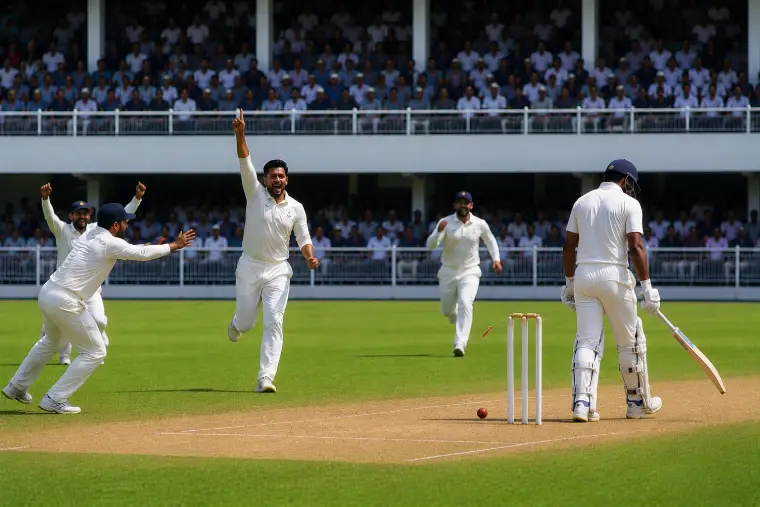
ICC always makes sure that International cricket is not too busy; if it were, then players would go exhausted. This analysis includes ICC tournaments, bilateral commitments, and league cricket. In modern cricket, single players play multiple games in a year, so the Cricket Tournament Schedule 2026-2027 has a great balance, including commercial growth opportunities too.
The upcoming two-year period includes the ICC Men’s T20 World Cup 2026, ICC Women’s T20 World Cup 2026, ICC Cricket World Cup 2027, ongoing World Test Championship 2025-2027 fixtures, and numerous domestic franchise events. While many fans view the calendar simply as a list of tournaments, the real story lies in understanding why the schedule has become increasingly crowded and what this means for the future of the sport.
A deeper analysis of the Cricket Tournament Schedule 2026-2027 shows that cricket is entering a new era where scheduling decisions are driven not only by sporting priorities but also by broadcasting value, player workload management, and global market expansion.
Understanding The Core Concept
The Cricket Tournament Schedule 2026-2027 is more than a collection of fixtures. It represents the strategic planning framework used by the International Cricket Council (ICC), national boards, broadcasters, and franchise organizers to maximize audience engagement while maintaining competitive balance.
Modern cricket operates across three major layers:
- ICC global tournaments
- Bilateral international series
- Domestic franchise competitions
Each layer serves a different purpose.
ICC tournaments such as the ICC Men’s T20 World Cup 2026 and ICC Cricket World Cup 2027 drive global interest and generate substantial commercial revenue. Bilateral series continue to support traditional rivalries and contribute significantly to board revenues. Meanwhile, franchise cricket has emerged as a major economic force, attracting international talent and expanding cricket’s reach into new markets.
The International Cricket Calendar 2026-2027 demonstrates how these three layers are becoming increasingly interconnected. Scheduling one event now directly impacts the availability of players, broadcasters, and even venue resources for another.
Another important factor is the Future Tours Programme (FTP) Cricket Calendar. The FTP serves as cricket’s long-term scheduling roadmap, ensuring member nations meet their international commitments while leaving room for major tournaments and commercial competitions.
Understanding this structure is essential because it explains why the Cricket Tournament Schedule 2026-2027 appears significantly more complex than calendars from a decade ago.
Data Comparison & Statistical Evidence
One of the clearest ways to understand the Cricket Tournament Schedule 2026-2027 is by examining the distribution of major cricket events.
Major Global Events During 2026-2027
| Tournament | Format | Year | Importance |
|---|---|---|---|
| ICC Men’s T20 World Cup 2026 | T20I | 2026 | Global T20 Championship |
| ICC Women’s T20 World Cup 2026 | T20I | 2026 | Women’s Global Event |
| ICC Cricket World Cup 2027 | ODI | 2027 | Premier ODI Tournament |
| World Test Championship 2025-2027 | Test | 2025-27 | Test Cricket Cycle |
| IPL 2026 | T20 | 2026 | Largest Franchise League |
| PSL 2026 | T20 | 2026 | Pakistan’s Premier League |
| SA20 2026 | T20 | 2026 | South African Franchise Competition |
| The Hundred 2026 | Limited Overs | 2026 | England’s Domestic Showcase |
The table shows that international cricket and franchise cricket now coexist throughout the year instead of operating in separate windows.
Format Distribution Across Elite Nations
A review of leading cricket nations reveals the continued expansion of multi-format cricket.
| Team Category | Test Focus | ODI Focus | T20I Focus |
| India | High | Medium | Very High |
| Australia | High | Medium | High |
| England | High | Medium | High |
| South Africa | Medium | Medium | High |
| New Zealand | Medium | Medium | High |
This balance highlights an important trend. While Test cricket remains important through the World Test Championship 2025-2027, the fastest growth continues to occur in the T20 ecosystem.
The Upcoming ICC Cricket Tournaments 2026-2027 are heavily influenced by this shift. T20 events attract larger television audiences, greater sponsorship interest, and stronger digital engagement compared to most bilateral contests.
Also Read: How WTC Points Are Calculated In The World Test Championship
The Rise Of Franchise Cricket
The last decade where franchise competitions expanded really drastically, just like an ecosystem that matches international cricket. Today, players can participate in leagues across India, Australia, Pakistan, South Africa, the UAE, England, and the United States.
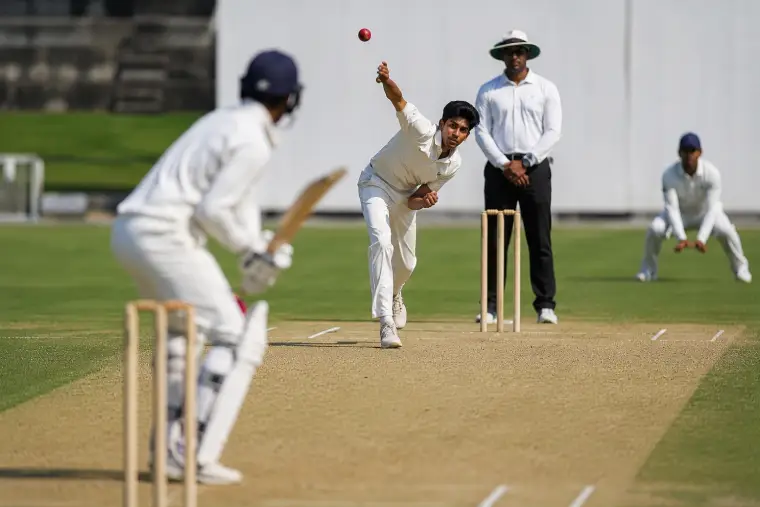
This growth has transformed the Cricket Tournament Schedule 2026-2027 into one of the most commercially significant periods in cricket history.
For administrators, franchise leagues generate revenue.
For players, they create earning opportunities.
For broadcasters, they deliver consistent audience engagement.
As a result, modern scheduling decisions increasingly consider franchise windows alongside international commitments.
Key Reasons Behind The Trend
Structural Differences In Cricket’s Modern Economy
The biggest reason behind the increasingly crowded Major Cricket Events And Series Schedule 2026-2027 is financial diversification.
Historically, national boards relied heavily on bilateral cricket for revenue generation.
Today, income comes from multiple sources:
- ICC tournament distributions
- Broadcasting contracts
- Franchise league partnerships
- Sponsorship agreements
- Digital streaming rights
Because revenue is now spread across several channels, administrators schedule more events throughout the year to maximize commercial returns.
This structural shift explains much of the expansion seen in the Cricket Tournament Schedule 2026-2027.
Tactical Importance Of Year-Round Engagement
Cricket is competing against football, basketball, tennis, and various entertainment platforms for audience attention.
A crowded calendar helps maintain visibility.
Rather than concentrating interest around a few major tournaments, governing bodies now aim to keep cricket active throughout the year.
This strategy is especially visible in the International Cricket Calendar 2026-2027, where major events are distributed across different months to sustain fan engagement.
The result is a more continuous cricket ecosystem that reduces periods of inactivity.
Skill Development Across Formats
Another overlooked factor involves player development.
Modern cricketers must perform in Tests, ODIs, and T20Is while adapting to different conditions and tactical requirements.
The Cricket Tournament Schedule 2026-2027 reflects this demand by maintaining strong representation across all three international formats.
While franchise leagues emphasize T20 skills, bilateral cricket and the World Test Championship 2025-2027 continue to provide opportunities for red-ball development.
This balance remains essential because international teams still require specialists capable of succeeding across multiple formats.
Expansion Of Women’s Cricket
The ICC Women’s T20 World Cup 2026 represents another significant scheduling development.
Women’s cricket continues to experience substantial growth in participation, broadcasting reach, and commercial value.
As a result, governing bodies are allocating more calendar space to women’s competitions than ever before.
This trend is not simply about increasing the number of matches. It reflects a broader effort to create sustainable pathways for female players and strengthen cricket’s global footprint.
The Cricket Tournament Schedule 2026-2027 therefore serves as evidence of how the sport is expanding across both men’s and women’s competitions.
Why The Opposite Scenario Fails
Some critics argue that cricket should reduce the number of tournaments and return to a simpler international structure dominated by bilateral cricket. While the idea may sound appealing from a traditional perspective, the numbers suggest otherwise.
A calendar built primarily around bilateral series faces several limitations.
First, audience engagement is increasingly driven by high-profile events. ICC tournaments consistently attract larger global audiences than most bilateral contests. The ICC Men’s T20 World Cup 2026 and ICC Cricket World Cup 2027 are expected to generate significantly higher international viewership than regular series because they bring together multiple nations in a single competitive framework.
Second, modern broadcasting economics favor premium events. Broadcasters prefer tournaments that deliver sustained audience interest over several weeks rather than isolated matches spread throughout the year.
Third, franchise cricket has created alternative opportunities for players and stakeholders. Ignoring this reality would reduce earning potential for players and commercial value for cricket boards.
The Cricket Tournament Schedule 2026-2027 reflects these market realities. A return to a purely traditional structure would likely reduce revenue, global reach, and year-round engagement.
Another challenge involves emerging cricket nations. Expanded ICC events provide opportunities for developing teams to compete on larger stages. Without these tournaments, cricket’s growth beyond traditional powerhouses would slow considerably.
Therefore, while a simplified calendar may appear attractive on paper, it would struggle to support the modern financial and competitive demands of the sport.
Real Match Examples And Case Studies
Examining recent cricket cycles helps explain why the current Cricket Tournament Schedule 2026-2027 has evolved in its present form.
India Across Multiple Competitions
India remains one of the best examples of modern scheduling complexity.
Over recent years, the Indian team has balanced:
- World Test Championship commitments
- ICC tournaments
- Bilateral ODI series
- Bilateral T20I series
- IPL participation
This multi-layered structure has demonstrated how major cricket nations now operate across several competitive environments simultaneously.
Australia’s Multi-Format Success
Australia’s recent performances highlight the importance of maintaining balance across formats.
The team has remained competitive in:
- Test cricket
- ICC ODI events
- ICC T20 competitions
Their success demonstrates why the Future Tours Programme (FTP) Cricket Calendar continues to preserve opportunities for all formats rather than prioritizing only one version of the game.
South Africa And Franchise Growth
South Africa provides an excellent case study of franchise cricket’s influence.
The emergence of SA20 has increased domestic commercial opportunities while also attracting international players and broadcasting investments.
This development illustrates how franchise competitions are becoming important components of the broader Cricket Tournament Schedule 2026-2027 rather than existing as separate entities.
Expert Insight: The Hidden Shift Most Fans Miss
Most discussions focus on how many tournaments appear in the calendar.
However, the more important trend is how cricket is gradually transitioning toward a dual-ecosystem model.
The first ecosystem is international cricket.
This includes:
- ICC Men’s T20 World Cup 2026
- ICC Women’s T20 World Cup 2026
- ICC Cricket World Cup 2027
- World Test Championship 2025-2027
- Bilateral international series
The second ecosystem is franchise cricket.
This includes:
- IPL
- PSL
- SA20
- BBL
- The Hundred
- Major League Cricket
Historically, international cricket dominated the global landscape.
Today, franchise leagues operate as powerful commercial properties with their own audiences, sponsors, and broadcast markets.
The Cricket Tournament Schedule 2026-2027 reveals that governing bodies are no longer choosing between international and franchise cricket. Instead, they are attempting to accommodate both systems simultaneously.
This is perhaps the most important insight emerging from the current calendar.
The future of cricket is likely to depend on how effectively administrators balance these competing priorities without overloading players or reducing competitive quality.
Practical Calendar Analysis
The following table highlights the strategic role of major competitions expected to influence cricket between 2026 and 2027.
| Competition | Format | Period | Strategic Role |
|---|---|---|---|
| ICC Men’s T20 World Cup 2026 | T20I | 2026 | Global Expansion Of T20 Cricket |
| ICC Women’s T20 World Cup 2026 | T20I | 2026 | Growth Of Women’s Cricket |
| ICC Cricket World Cup 2027 | ODI | 2027 | Premier 50-Over Tournament |
| World Test Championship 2025-2027 | Test | Ongoing | Preservation Of Test Cricket |
| IPL 2026 | T20 | Annual | Commercial Benchmark |
| PSL 2026 | T20 | Annual | Regional Market Growth |
| SA20 2026 | T20 | Annual | South African Expansion |
| The Hundred 2026 | Limited Overs | Annual | Audience Innovation |
| Major League Cricket | T20 | Annual | United States Growth Strategy |
The table demonstrates that modern scheduling is driven by multiple objectives rather than a single competitive goal.
These objectives include:
- Revenue generation
- Audience expansion
- Global participation
- Format preservation
- Commercial sustainability
Understanding these priorities helps explain why the Cricket Tournament Schedule 2026-2027 looks increasingly complex compared to previous decades.
Conclusion
The key takeaway from the Cricket Tournament Schedule 2026-2027 is not just about the number of tournaments being played across the year. The management really matters a lot in how games structure followed that should be flexible enough for each game to be played.
The sport is undergoing a structural transformation. ICC events continue to provide global prestige, bilateral cricket maintains traditional rivalries, and franchise leagues drive commercial growth. Together, these forces are reshaping how cricket is organized, marketed, and consumed.
The International Cricket Calendar 2026-2027 shows that cricket is no longer operating within a single system. Instead, it is balancing international priorities, player workloads, commercial opportunities, and global expansion goals simultaneously.
For fans, administrators, and players alike, the Cricket Tournament Schedule 2026-2027 offers a valuable snapshot of where the game stands today and where it is likely heading over the next decade.
FAQs
Why is the Cricket Tournament Schedule 2026-2027 so busy?
More ICC events, franchise leagues, and international commitments have expanded the calendar.
Which tournament is the biggest in 2026-2027?
The ICC Cricket World Cup 2027 is the biggest global ODI event.
What is the Future Tours Programme?
It is the ICC’s framework for scheduling international cricket series.
Why are franchise leagues growing rapidly?
They generate strong revenue, viewership, and player opportunities.
Is Test cricket still important in 2026-2027?
Yes, the World Test Championship 2025-2027 keeps Test cricket relevant.